Singing Lessons vs. Apps for Adult Beginners: An Honest Comparison (2026)
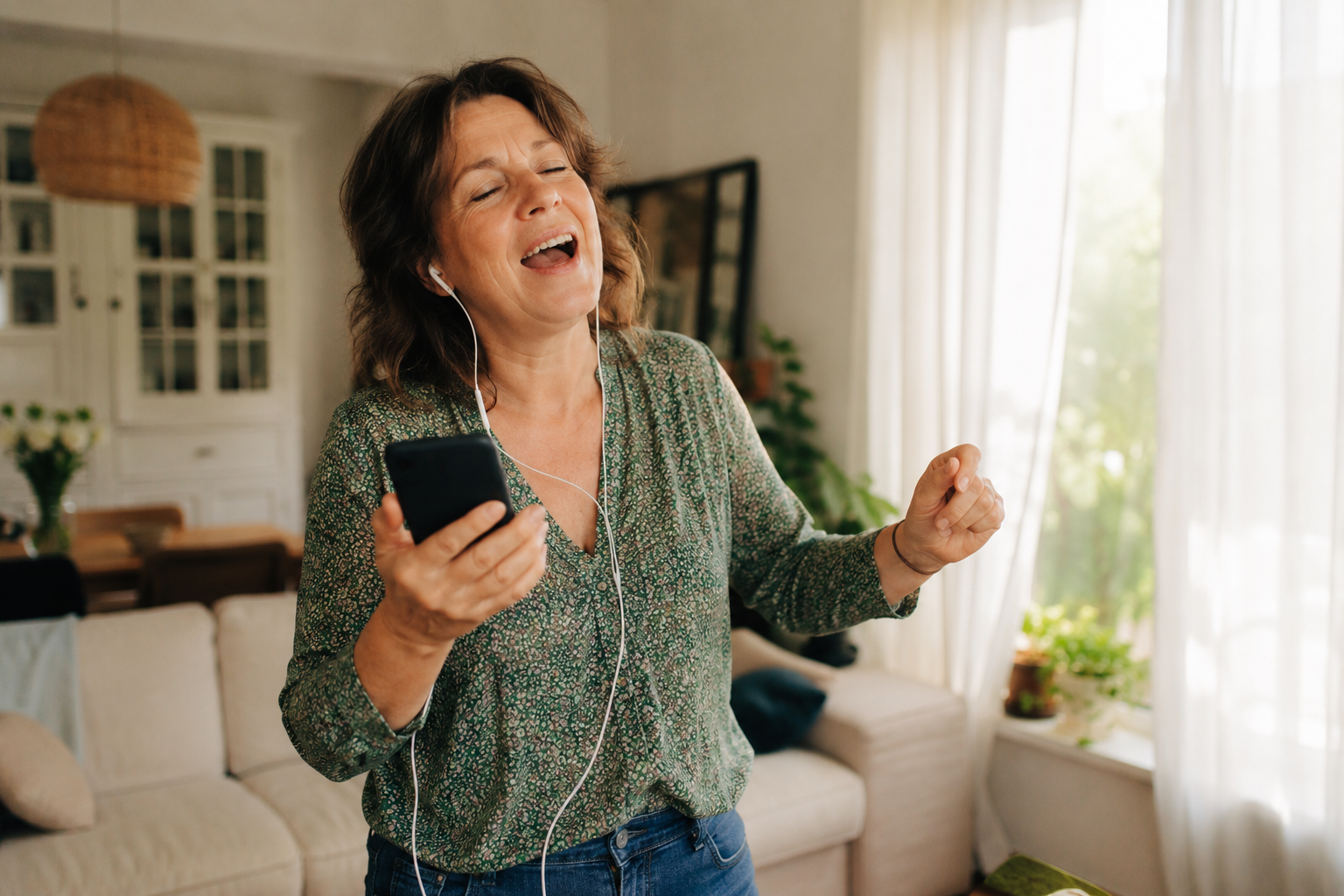
For most adult beginners, an app is the better place to start and private lessons are the better place to go deeper. An app wins on cost, flexibility, and low-pressure daily practice; a live coach wins on personalized feedback, accountability, and fixing a specific vocal habit. Many adults use both — an app daily, a lesson occasionally.
I'm Ingrid Moss, and I've spent 30+ years coaching singers — most recently women coming back to singing after years away. The question I hear most from beginners isn't "how do I sing better," it's "should I take lessons or just use an app?" Here's the honest comparison, without the sales pitch.
Are singing lessons or apps better for an adult beginner?
It depends on what's stopping you. If the barrier is starting — finding five quiet minutes, getting over the cringe of hearing your own voice, building a habit — an app is better, because it's cheaper, always available, and lower-pressure. If the barrier is a specific problem — you strain on high notes, your voice tires fast, you can't tell if you're on pitch — a live coach will solve it faster than any app, because they can hear exactly what you're doing and adjust in real time.
For the adults I work with, the honest sequence is usually: build the daily habit with an app first, then add occasional lessons once you know what you specifically want to fix.
Singing lessons vs. apps at a glance
Cost: private lessons run $40–$120+ per hour; apps are free to about $15/month.
Schedule: lessons are a fixed weekly appointment; an app works any time, in five-minute pieces.
Feedback: a coach gives personalized, real-time, human feedback; apps give general routines (some add pitch analysis).
Accountability: lessons are high (a person is expecting you); apps are self-driven, helped by streaks and reminders.
Pressure and privacy: lessons mean singing in front of someone; an app is completely private.
Best for: lessons for fixing a specific habit and going deeper; apps for starting and building a daily habit.
When is an app the better choice?
An app is the better choice when cost, schedule, or nerves are the thing standing between you and singing. Three situations where I steer beginners to an app first:
You're rebuilding a habit, not chasing a performance. Five minutes most days beats a one-hour lesson once a week for getting your voice back. Consistency is what rebuilds coordination and stamina, and apps are built for consistency.
You're self-conscious. A huge part of returning to singing is getting comfortable making sound again. An app lets you do that with nobody listening — which, for a lot of adults, is the whole unlock.
Your schedule won't hold a weekly appointment. If you're parenting, working, or both, a fixed lesson slot is the first thing that falls apart. An app fits into the gaps.
When are private lessons worth it?
Private lessons are worth it when you have a specific problem an app can't see. A coach earns their fee when:
Something hurts or tires quickly. Vocal strain, a voice that gives out after a few songs, tension you can't locate — these are exactly what a trained ear catches in minutes.
You've plateaued. You've been practicing but stopped improving. A coach can spot the one habit holding you back.
You have a goal with a deadline. A wedding song, an audition, a specific performance — a human can prepare you for the specifics.
Lessons are wonderful. They're just not the lowest-friction starting point for most adults — and the friction is usually what decides whether someone actually keeps singing.
Can an app replace a vocal coach?
For the first several months of getting your voice back, an app can carry most of the load — warm-ups, daily practice, building range and stamina gently. What an app can't yet replace is the human read on why something feels hard: confidence, identity, the "I used to be able to do this" grief that returning singers carry. That part is most of the early work.
Which singing app should an adult beginner use?
If you're an adult coming back to singing, you want an app that runs in five minutes, doesn't force you to record yourself out loud on day one, and meets you at the range your voice actually has today. That's why I built Vocal Refresh: short daily routines, gentle by design, made for the "I used to sing but stopped" returner. It's free to try. If you want the full field, I tested and ranked the main options in the best vocal training apps for moms returning to singing (2026).
The honest bottom line
Don't let the lessons-or-app question stall you for one more week. Start with whichever one you'll actually open tomorrow. For most adults that's an app — start there, build the habit, and add a lesson when you hit a specific wall. The worst option is the one where you keep researching and never sing.
Keep going:
Frequently Asked Questions
Is it cheaper to learn singing with an app or with lessons?
An app is far cheaper. Singing apps run from free to about $15/month, while private lessons typically cost $40–$120+ per hour. For the price of a single lesson you can use most apps for several months.
Can you really learn to sing from an app as an adult?
Yes — adults can absolutely build pitch, breath support, range, and stamina from an app with consistent practice. An app handles the fundamentals and the daily habit well; a coach is most useful later for personalized feedback on a specific issue.
Do I need lessons if I just want to sing for fun?
No. If your goal is to enjoy singing and feel like yourself again, a good app plus regular, low-pressure practice is plenty. Lessons become worth it if you develop a specific goal or run into a problem like strain.
What's the best singing app for someone who hasn't sung in years?
Look for short, gentle, recording-optional routines that adjust to your current range. Vocal Refresh was built specifically for returning singers; the broader field is compared in our 2026 apps roundup.
Should I use an app and lessons together?
That's the combination I recommend most: an app for daily five-minute practice, plus an occasional lesson when you want a human ear on a specific habit. The app keeps you consistent; the lesson fixes what consistency alone can't.